Three Forks, Two Rods: Four Days on the Conejos
Seven miles in to the valley below the Three Forks of the Conejos, four days of brookies and rainbows, three nights of weather — and the eight-and-a-half-foot glass rod that made the nine-footer dead weight.
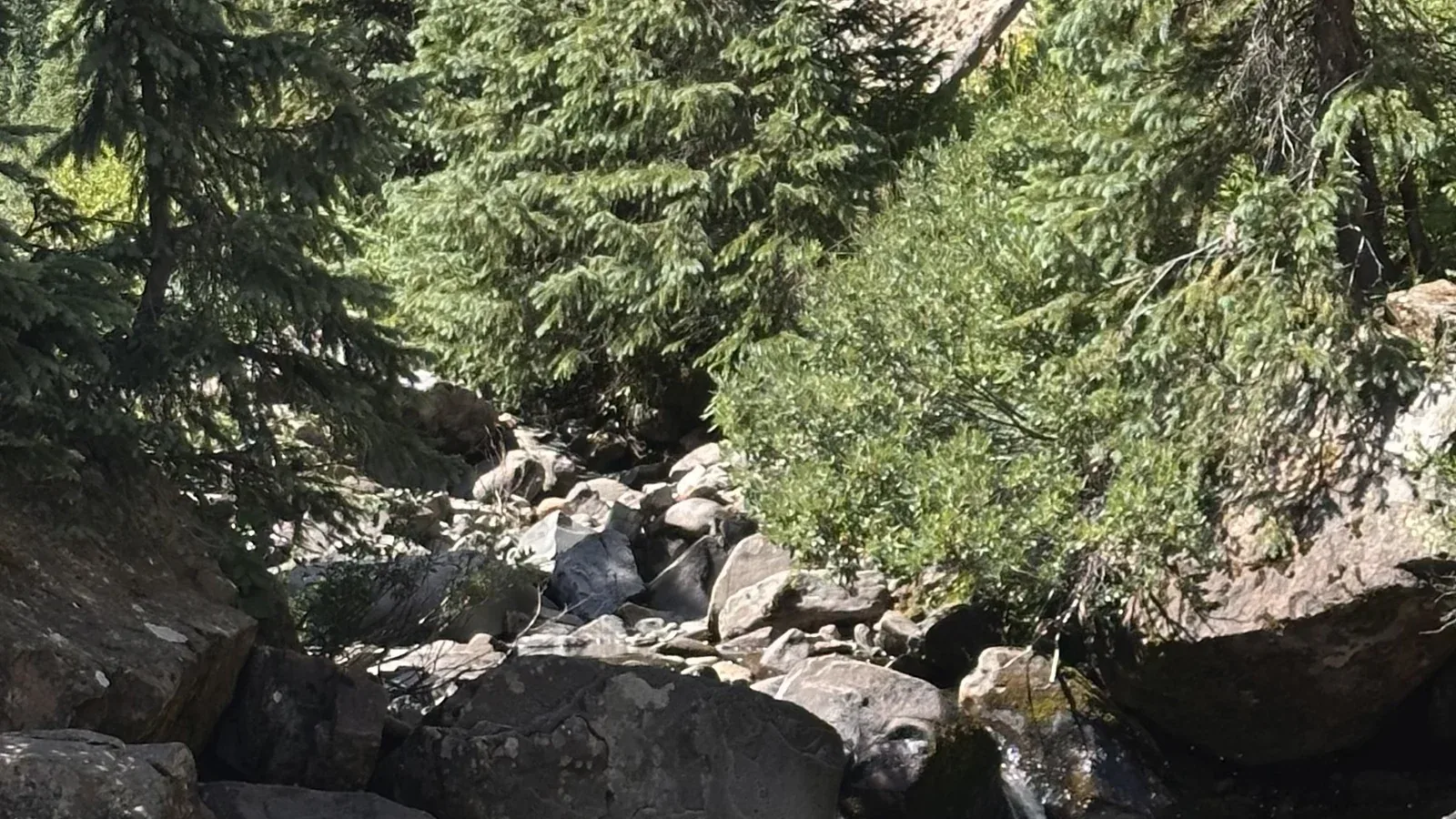
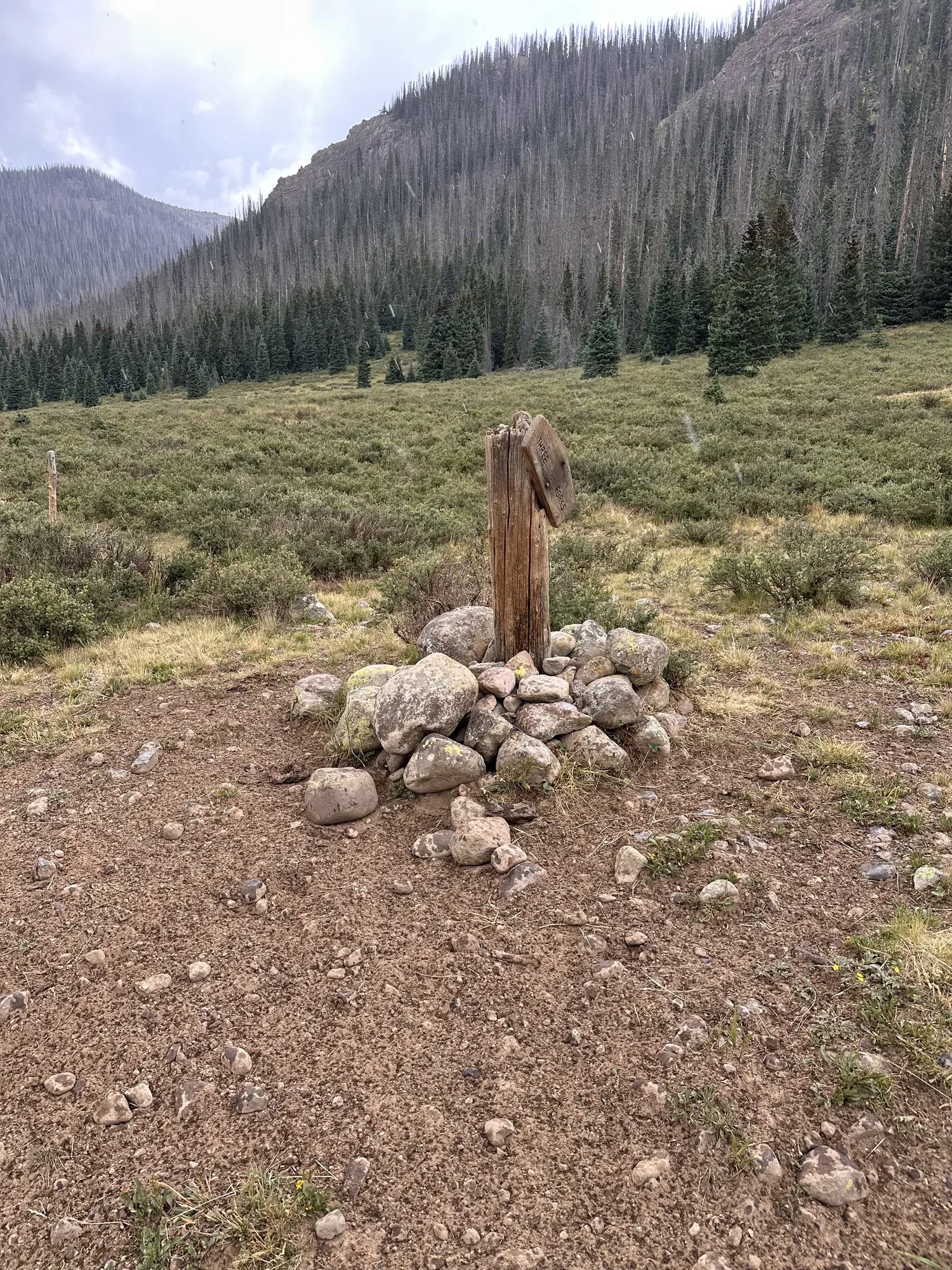
We walked in seven miles from Three Forks Trailhead 712 and camped at 10,246 feet, in the valley just below where the three forks come together. Four days, three nights, August of 2025. Two of those nights the valley did everything it could to talk us out of the fourth day.
This is a field report, which on this site means the trip happened, the gear is mine, and the verdicts below were earned with actual miles rather than a spec sheet. Everything I carried is in the closet in the app, weighed on my own scale.
The water
These are remote high-mountain tributaries feeding the main Conejos — the sort of place that is worth seven miles precisely because it is seven miles. We had the water to ourselves.
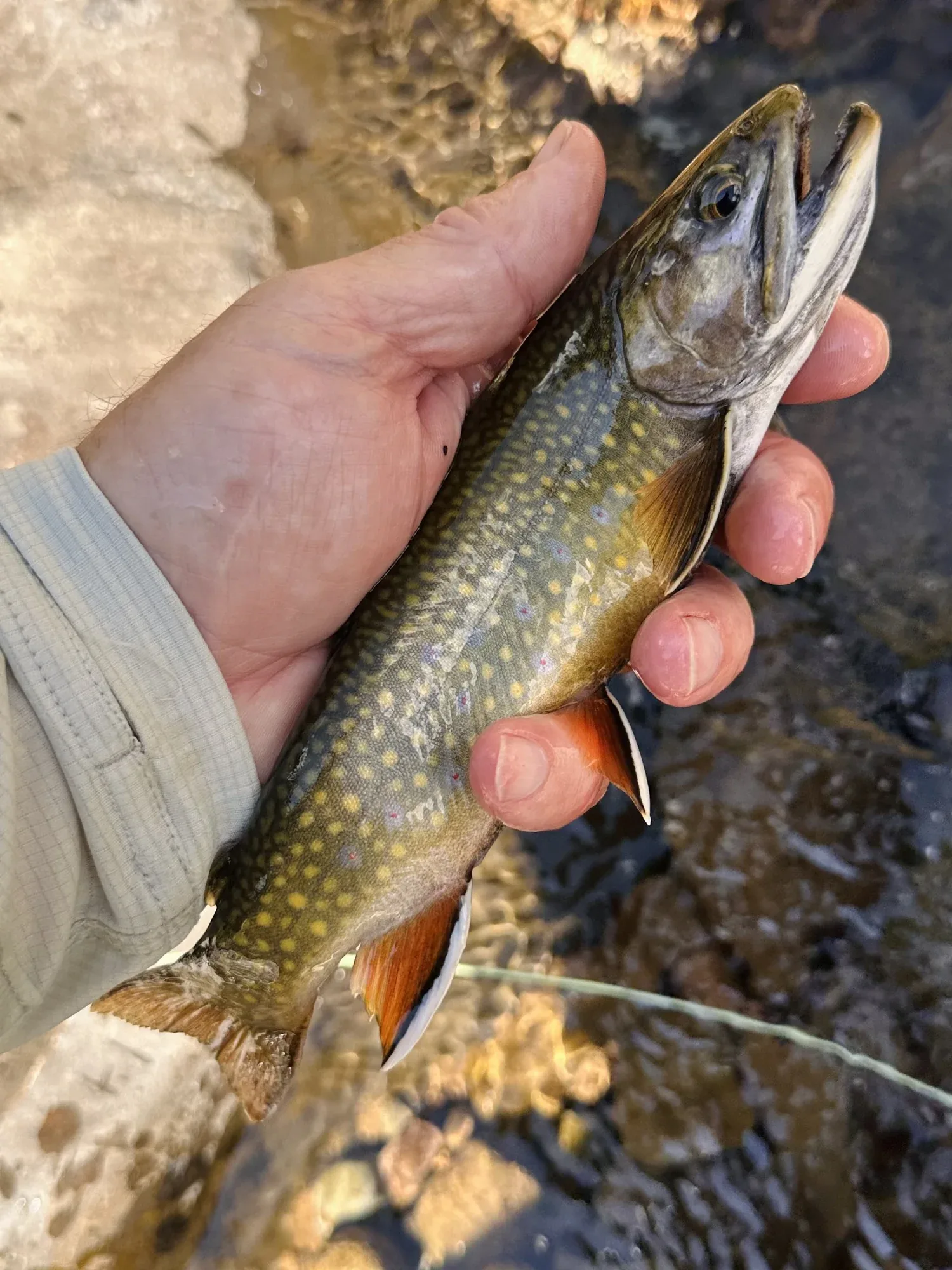
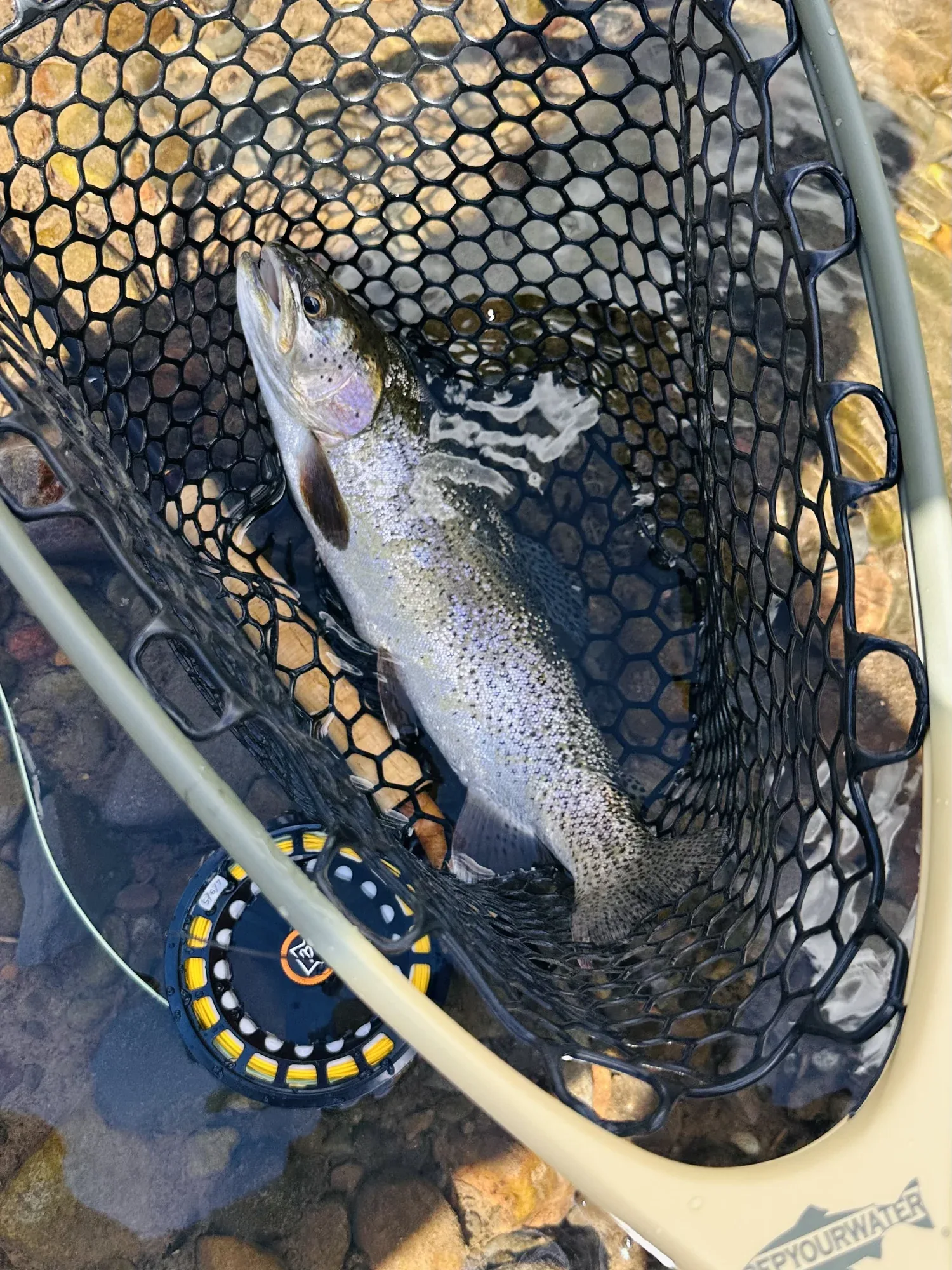
The fishing split cleanly into two problems. Working the smaller streams on the hike up toward Blue Lake, I threw a size 14 Yakoda Chimera hopper and caught brook trout more or less as fast as I could get a decent drift. Down on the main river, I went to a size 12 Chimera with a Lip Sticker dropper. The brookies were abundant. The rainbows were considerably less abundant — but every one we hooked was a quality fish, which is the trade I would make again.
The turn: I carried two rods and only needed one
Here is the part I did not expect to write.
I carried two four-weights. The TFO Solution 9’ paired with a Hardy Ultradisc UDLA 4000, and the McFarland GTX 8’6” glass rod paired with a Ross Animas. The nine-footer was the sensible choice — the rod you bring because it covers more water and you can justify it on paper.
The McFarland was better. Not marginally, not situationally — better for four straight days of this water. Short casts in tight quarters, close-range accuracy in pocket water, and a glass action that protects light tippet against fish that eat at nine feet instead of forty. The 8’6” rod fit the river. The 9’ rod fit an idea about the river I had formed at home.
So the honest accounting: I hauled a second rod and reel seven miles up a drainage, and it fished for a fraction of the trip. That is not a disaster — the redundancy argument is real, and a broken tip seven miles from the truck ends a trip that a spare rod would have saved. But it is the difference between insurance I chose to carry and gear I brought because I could not decide. On this trip it was the second one.
Next time: the McFarland goes, the TFO stays home, and the redundancy question gets answered honestly at the kitchen table instead of at the trailhead.
The valley at night
We had hail, heavy rain, thunder and lightning on two of the three nights. Mornings were freezing.
All that cold air slid off the surrounding peaks after dark and pooled in the valley we were sleeping in. And before anyone offers the obvious fix: there was nowhere in that valley that would have been warmer. That is simply what the terrain does at 10,246 feet with mountains on every side — the cold has exactly one place to go, and we were camped in it. You do not solve that with a better tent site. You solve it with a sleep system, or you do not solve it.
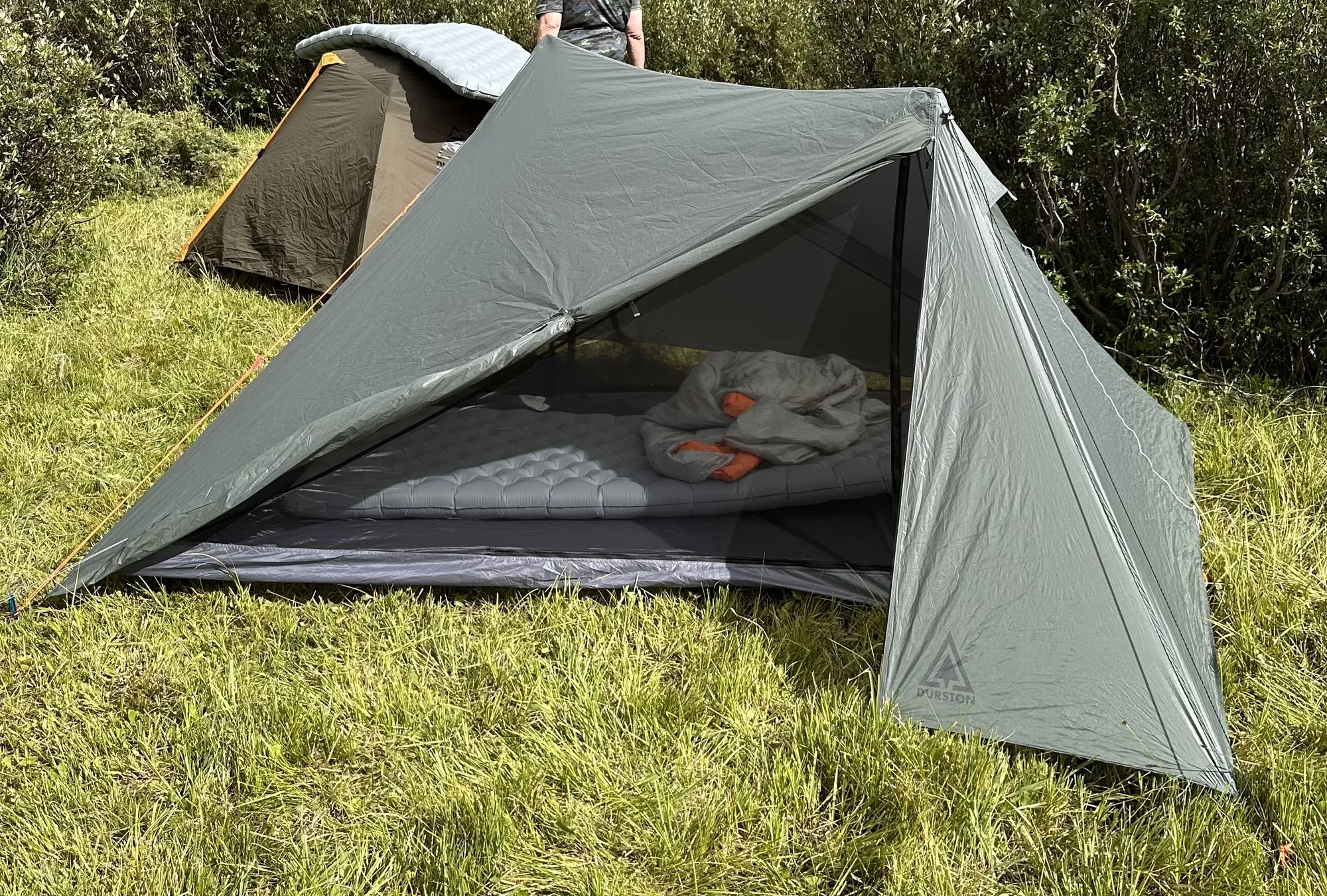
The Durston X-Mid handled everything the valley threw at it. The Therm-a-Rest NeoLoft and the Neve Gear Waratah quilt kept me warm and, more to the point, kept me sleeping — through hail, through the thunder, and through mornings cold enough that getting out of the quilt required a formal negotiation.
That pad weighs 32 ounces. There is a version of me that would have cut sixteen of those ounces and spent three nights being cold and a little worse at fishing each following day. This is the entire argument this site is built on, and I got to test it in a valley with no warmer option available: the pad earned its weight. So did the quilt. So did the tent.
What earned its place
- Durston X-Mid — Worth Its Weight. Three nights of hail, rain, and lightning, no complaints.
- Therm-a-Rest NeoLoft + Neve Waratah quilt — Worth Its Weight, emphatically. Sleep is a performance item, and this valley was going to test it whether I liked it or not.
- McFarland GTX 8’6” 4wt + Ross Animas — Essential. The right rod for tight water and close fish.
- TFO Solution 9’ 4wt + Hardy Ultradisc UDLA 4000 — Leave Home Next Time. Good rod, wrong trip.
- Size 14 Yakoda Chimera hopper — the small-stream answer, brookies on top.
- Size 12 Chimera with a Lip Sticker dropper — the main-river answer.
What I would change
One thing: drop the second rod.
That is the whole list. The shelter, the pad, and the quilt all did exactly what I carried them to do, in weather that gave them every opportunity not to. The rest of the kit goes back exactly as it was.
Full loadout, with weights and costs, is in the app. Open the loadout →